
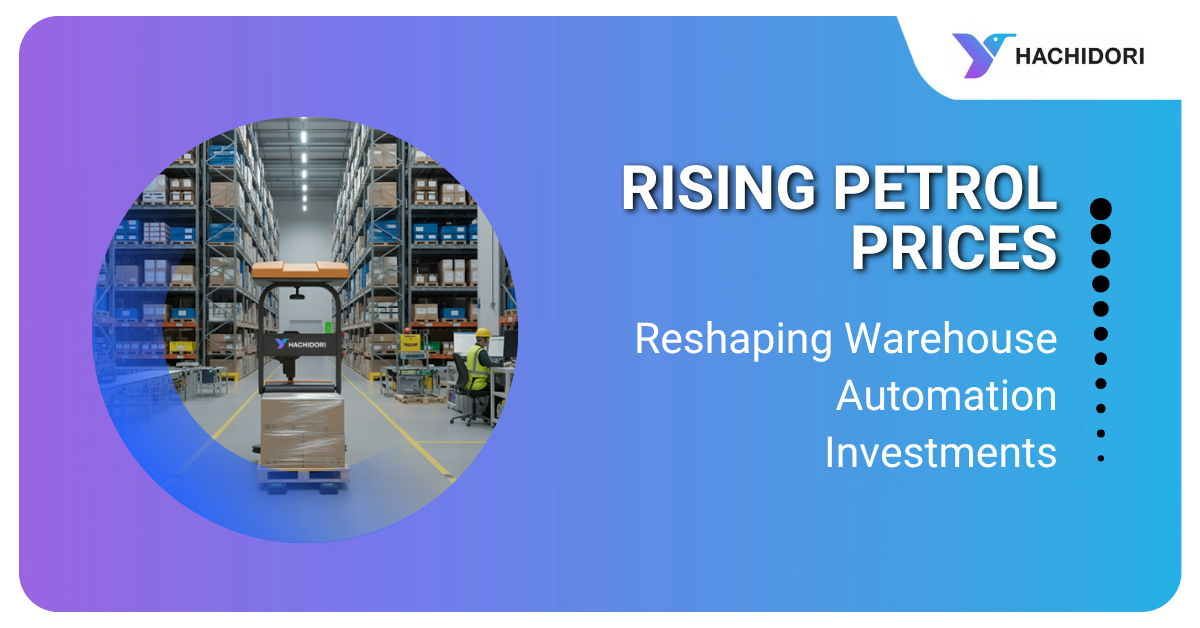
The global rise in petrol and fuel prices is creating new challenges for manufacturing industries, warehouses, and factory logistics operations. Businesses that rely heavily on fuel-powered material handling systems are facing increasing operational costs, unpredictable supply chain expenses, and growing pressure to improve efficiency.
As a result, companies are now accelerating warehouse automation investments to reduce dependency on fuel-driven logistics operations and build more sustainable, cost-effective manufacturing environments.
From large-scale manufacturing plants to modern distribution centers, organizations are shifting toward intelligent automation technologies such as AMR Robot systems, AGV Robot solutions, and smart factory automation platforms to improve operational stability during fuel price fluctuations.
The growing focus on automation is no longer just about productivity — it is now becoming a strategic business decision for long-term operational resilience.
Warehouse Automation Investments
Rising fuel costs are directly impacting internal logistics operations inside warehouses and factories. Traditional material transportation methods often depend on forklifts, manual handling equipment, and fuel-powered vehicles that increase operating expenses over time.
This is why businesses are significantly increasing warehouse automation investments across industries such as:
- Automotive manufacturing
- Electronics manufacturing
- FMCG production
- Pharmaceutical warehousing
- E-commerce fulfillment centers
- Industrial manufacturing facilities
Warehouse automation technologies help companies reduce fuel dependency while improving productivity, accuracy, and workflow efficiency.
Modern automation systems are designed to optimize intralogistics operations through intelligent routing, automated transportation, and real-time operational monitoring. These technologies help factories maintain stable performance even during periods of rising fuel costs.
Many manufacturers are now prioritizing scalable automation systems instead of investing further in traditional fuel-dependent logistics infrastructure.
Why Rising Petrol Prices Are Driving Automation Demand
Fuel costs affect nearly every aspect of warehouse and factory operations. From material transportation to equipment operation, higher petrol prices increase overall manufacturing expenses.
Several factors are driving businesses toward factory automation and warehouse automation solutions:
Increased Operational Costs
Fuel-powered internal logistics equipment requires continuous fuel consumption, maintenance, and operational supervision. Rising petrol prices directly increase transportation and handling costs inside factories and warehouses.
Automation technologies such as AMR Robot systems help reduce these recurring expenses by operating on energy-efficient electric systems.
Pressure to Improve Efficiency
Manufacturers are under constant pressure to improve production speed while controlling operational costs. Automation enables faster material movement, reduced delays, and optimized warehouse workflows.
Automated systems can operate continuously with minimal downtime, improving overall productivity.
Labor and Fuel Dependency Risks
Many businesses are facing dual challenges — rising fuel costs and labor shortages. Manual transportation systems require higher manpower involvement and are more vulnerable to operational disruptions.
Autonomous automation systems reduce dependency on both fuel-intensive processes and labor-heavy operations.
Sustainability and Energy Efficiency Goals
Companies are increasingly focusing on sustainable manufacturing practices. Electric-powered automation technologies support energy-efficient warehouse operations while helping businesses reduce carbon emissions.
As environmental regulations become stricter, sustainable factory automation is becoming an important long-term investment.
The Growing Role of AMR Robot Solutions
AMR Robot technology is becoming one of the most preferred solutions in modern warehouse automation.
Unlike traditional guided vehicles, AMR Robots use intelligent navigation systems, AI-driven mapping, and real-time obstacle detection to move autonomously across warehouse floors.
These robots can dynamically optimize transportation routes without requiring fixed infrastructure modifications.
AMR Robots are commonly used for:
- Material transportation
- Line-side delivery
- Inventory movement
- Warehouse picking operations
- Finished goods transportation
- Smart intralogistics management
One major advantage of AMR Robot systems is flexibility. Businesses can easily scale operations and modify workflows without redesigning warehouse layouts.
As fuel prices continue rising, many organizations see AMRs as a future-ready alternative to fuel-based transportation systems.
An experienced Autonomous Mobile Robots Manufacturer can help industries deploy customized AMR solutions tailored to specific warehouse and manufacturing requirements.
AGV Robot Systems Still Play an Important Role
While AMR technology is rapidly growing, AGV Robot systems continue to be widely used in structured industrial environments.
AGV Robots typically follow predefined routes using magnetic strips, sensors, or guided pathways. These systems are effective for repetitive transportation tasks in stable production environments.
Industries use AGV Robots for:
- Pallet transportation
- Repetitive material movement
- Assembly line logistics
- Warehouse transportation tasks
- Controlled production workflows
Compared to manual logistics systems, AGV Robots provide significant cost savings and operational consistency.
However, many modern factories are gradually moving toward AMR-based systems due to their greater flexibility and intelligent navigation capabilities.
How Factory Automation Improves Business Stability
Factory automation is no longer limited to large enterprises. Businesses of all sizes are investing in automation technologies to remain competitive in uncertain economic conditions.
Automation systems help manufacturers:
- Reduce operational downtime
- Improve material handling speed
- Increase warehouse accuracy
- Minimize transportation inefficiencies
- Lower long-term operational costs
- Improve worker safety
- Enhance production scalability
Fuel price volatility has made automation a critical part of long-term manufacturing strategy rather than an optional technology upgrade.
Manufacturers that invest in automation today are building stronger operational resilience for the future.
Future Trends in Warehouse Automation
The future of warehouse automation will be shaped by intelligent, connected, and energy-efficient technologies.
Several major trends are driving the next generation of automation investments:
AI-Powered Intralogistics
Advanced AI systems will optimize warehouse workflows, predict transportation demands, and improve operational decision-making in real time.
Smart Fleet Management
Future automation systems will allow multiple AMR Robots and AGV Robots to coordinate seamlessly through centralized fleet management platforms.
Data-Driven Warehouse Operations
Automation systems integrated with IoT sensors and analytics platforms will provide deeper operational visibility and predictive insights.
Sustainable Automation Technologies
Energy-efficient robotics and electric-powered transportation systems will continue replacing fuel-intensive warehouse operations.
Flexible Manufacturing Ecosystems
Future factories will require adaptable automation systems capable of supporting changing production demands and custom manufacturing workflows.
Why Businesses Are Increasing Automation Investments
Businesses are recognizing that automation is not only a productivity tool but also a protection against rising operational risks.
Key reasons companies are increasing warehouse automation investments include:
- Rising fuel costs
- Growing labor shortages
- Demand for operational efficiency
- Smart factory transformation
- Sustainability goals
- Supply chain resilience
- Faster production requirements
- Improved inventory management
- Reduced dependency on manual operations
Automation technologies are helping organizations build more stable, efficient, and scalable manufacturing environments.
Conclusion
Rising petrol prices are forcing manufacturers and warehouse operators to rethink traditional logistics operations. Businesses that depend heavily on fuel-driven transportation systems are experiencing increasing operational pressure and cost uncertainty.
As a result, warehouse automation investments are rapidly becoming a strategic priority across manufacturing industries.
Technologies such as AMR Robot systems, AGV Robot solutions, and advanced factory automation platforms are helping businesses reduce fuel dependency while improving operational efficiency, flexibility, and long-term sustainability.
Companies that invest in intelligent automation today will be better prepared to handle future supply chain challenges and evolving manufacturing demands.
Transform Your Warehouse with Smart Automation
Partner with an experienced Autonomous Mobile Robots Manufacturer to implement intelligent warehouse automation and factory automation solutions that improve efficiency, reduce operational costs, and support future-ready manufacturing operations.