

Tugger AMR

Autonomous Tugger Robot for Efficient Towing of Carts, Trailers & Bulky Loads in Warehouses and Factories

What is an AMR Tugger?

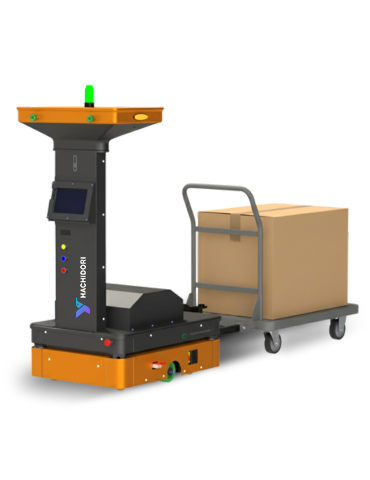
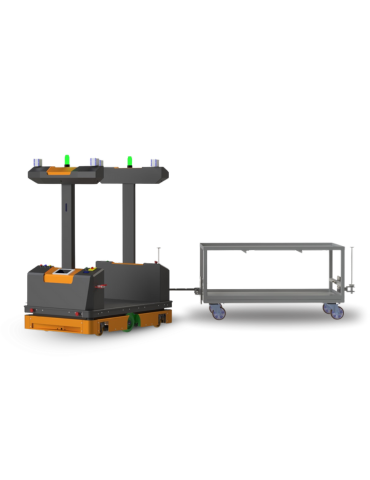
An AMR Tugger (Autonomous Mobile Robot Tugger) is a self-driving industrial robot engineered to tow carts, trailers, trolleys, and heavy loads through warehouses, assembly lines, and manufacturing facilities. Unlike traditional manual tugger trains or fixed-path AGVs, the autonomous tugger robot navigates dynamically — adapting in real time to people, obstacles, and changing floor layouts.

Hachidori’s Tugger Robot is a leading automated tugger solution purpose-built for Indian industry. It replaces manual tow trucks and fixed AGV trains with an intelligent, flexible fleet that delivers continuous material flow — 24 hours a day, 7 days a week — without infrastructure changes or floor modifications.

Key features of the Tugger Robot

Wireless Natural Navigation

Patented wireless natural navigation — no magnetic strips, guide wires, or fixed infrastructure required.

High Towing Capacity

Tows loads from 500 kg up to 3000 kg across multiple variants, supporting carts, trailers, and trolley trains.

Advanced Safety Sensors

2D LiDAR, depth camera, crash bumper, tower lamp, and emergency stop for safe co-existence with workers.

Dynamic Route Optimization

Real-time routing adapts to warehouse layout changes, congestion, and multi-cart train configurations.

Real-Time Fleet Monitoring

Live dashboards track tugger status, mission progress, towing load, and performance analytics.

Seamless System Integration

Native WMS and ERP integration via the VDA 5050 standard for plug-and-play deployment.

How the Tugger Robot works

Receives Task

Instructions from WMS or ERP system

Navigates

LiDAR for autonomous pathfinding

Couples Load

Autonomously hitches to cart or trailer

Transports

Tows safely across the facility

Updates System

Real-time data sync with WMS/ERP
Industries & Applications

Industrial tugger AMRs are deployed across sectors to replace manual tow trains and streamline intralogistics material flow.

Ready to Optimize Your Material Handling?

Join leading manufacturers who have replaced manual tow trains with Hachidori Tugger.

Technical Specifications

Category Sub-Category HT200 HT500 HT1000 HT2000 HT4000
Navigation Hachidori's patented Wireless Natural Navigation (WNN) with Sensor Fusion
Max. Payload Load (kg) 200 500 1000 2000 4000
Speed & Performance Max. Speed## 2 m/s 1.5 m/s 1.5 m/s 1.5 m/s 1 m/s
Min. Corridor Width – Straight (mm)**# 1000 1200 1200 1500 1800
Running Time (Hrs)**** 8 > 8 > 8 8 8
Battery Battery Type LiFePOâ‚„ LiFePOâ‚„ LiFePOâ‚„ LiFePOâ‚„ LiFePOâ‚„
Battery Capacity 48V, 12Ah 48V, 27Ah 48V, 27Ah 48V, 27Ah 48V, 54Ah
Charging Option Swappable Swappable Swappable Swappable Swappable
Safety Sensors 2D LiDAR + 3D Depth Camera with Sensor Fusion; Cat0 Emergency Stop and Cat1 Controlled Stop
Indicators Flashers, Buzzers, Sirens (all models)
Controls Ergonomically placed Touchscreen Display, Start/Stop & Emergency Buttons
Workflow Triggers Touchscreen (Manual) | Calling Device (Remote) | Centralized WMS API calls

Benefits of the Autonomous Tugger Robot

Hachidori Tugger AMR vs. alternatives

Feature Hachidori Tugger AMR Manual Tow Trains Traditional AGV Tugger
Navigation Wireless Natural Navigation Human dependent Fixed path
Flexibility High (dynamic routing) Low Medium
Safety Advanced sensors Low (accident risk) Medium
Efficiency High (24/7 operation) Low Medium
Labor dependency Minimal High Medium
Scalability Easily scalable fleet Not scalable Limited
WMS/ERP integration Native (VDA 5050) None Limited
Setup time Fast deployment None High (infrastructure)
Maintenance cost Low (predictive) High Medium
ROI timeline 12–18 months No ROI Medium ROI
Operational cost Low High (labor + fuel) High
Hachidori Tugger AMRs deliver up to 30–50% improvement in material flow efficiency compared to manual tow train operations.
ROI Calculator — Tugger AMR
Estimate your cost savings from deploying Hachidori Tugger AMRs. Enter your operational details below.
Enter your current operational details to calculate cost savings and ROI.
Input Your Operational Details
ⓘ Industry benchmark: 30–50% improvement with AMR deployment
Calculated ROI Results
Monthly Labor Cost (Current)
₹ 0
Workers × Monthly Salary
Estimated Cost After Automation
₹ 0
Residual labor + AMR operating cost
Monthly Savings
₹ 0
Based on efficiency improvement
Annual Savings
₹ 0
Monthly savings × 12
Estimated ROI (%)
0%
(Annual Savings / Deployment Cost) × 100
Payback Period
0 Months
Deployment Cost / Monthly Savings

Explore the Full Hachidori AMR Range

LightWeight AMR

Fast, flexible dynamic movement
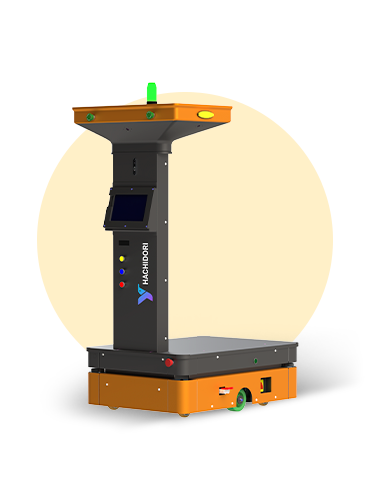
Unit Load Carrier

Load-on-top AMR, 200–2000 kg
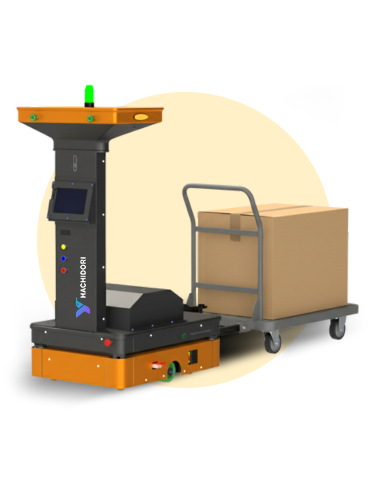
Tugger

Towing carts, trailers & trains
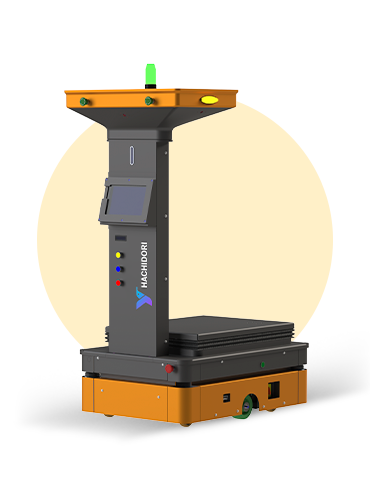
Lift & Move

Lifts existing trolleys & platforms
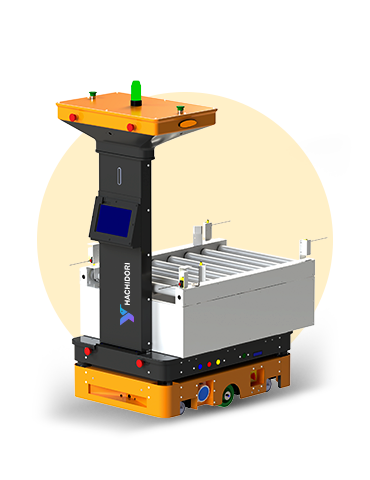
Dock & Convey

Docking with workbenches
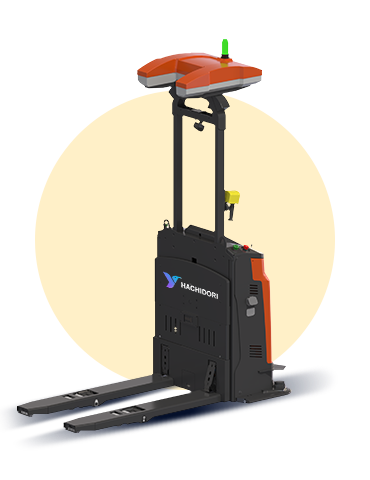
Autonomous Pallet Jack

Lift & move palletized materials
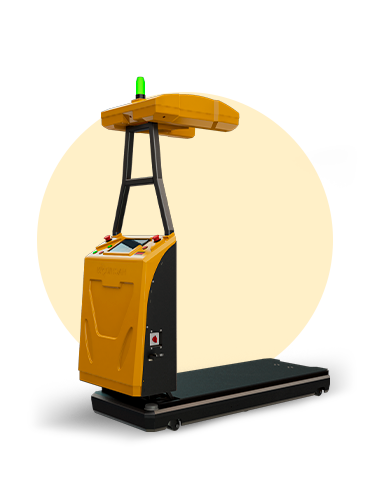
Sleek Lifting

Under-trolley seamless lifting
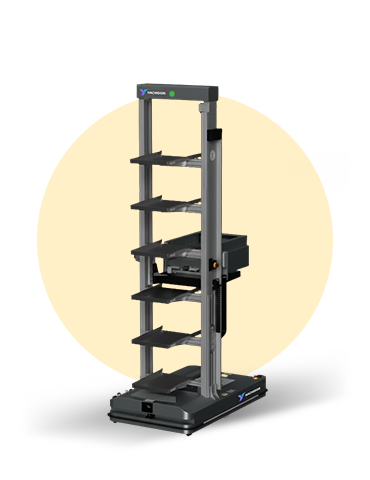
Carton Transfer Unit

Multi-tote carton transfer

Upgrade to intelligent automation today

Frequently asked questions — Tugger Robot

An AMR Tugger is an autonomous mobile robot that tows carts and trailers using Wireless Natural Navigation, with no fixed paths, guide wires, or floor modifications. Unlike traditional AGV tuggers that follow predefined routes, an autonomous tugger dynamically navigates, detects obstacles, and re-routes in real time.

Hachidori’s Tugger AMR is designed to tow carts, trolleys, trailers, and material trains with a towing capacity ranging from 500 kg up to 3000 kg depending on the variant selected.

It uses Hachidori’s patented Wireless Natural Navigation with AI, LiDAR, and SLAM to navigate autonomously, avoid obstacles, and optimize routes in real time — no magnetic strips, fixed tracks, or floor markers are needed.

Yes. Advanced safety features including 2D LiDAR, depth camera, crash bumper, and emergency stop allow safe co-existence with human workers on the shop floor.

Yes. Hachidori Tugger AMRs integrate natively with WMS and ERP systems via the VDA 5050 standard, enabling fast, plug-and-play deployment without extensive IT customization.

Minimal to no infrastructure changes are required. They use natural navigation and do not depend on fixed tracks, magnetic strips, or floor markers — making them ideal for facilities that cannot be shut down for retrofitting.

Customers typically achieve ROI within 12–18 months, with 30–50% improvement in material flow efficiency and significant reduction in labor and fuel costs associated with manual tow train operations.

Powered by 48V, 27AH rechargeable batteries with manual and swappable battery options for continuous, uninterrupted towing operations across multiple shifts.

Request Demo


    This will close in 0 seconds