
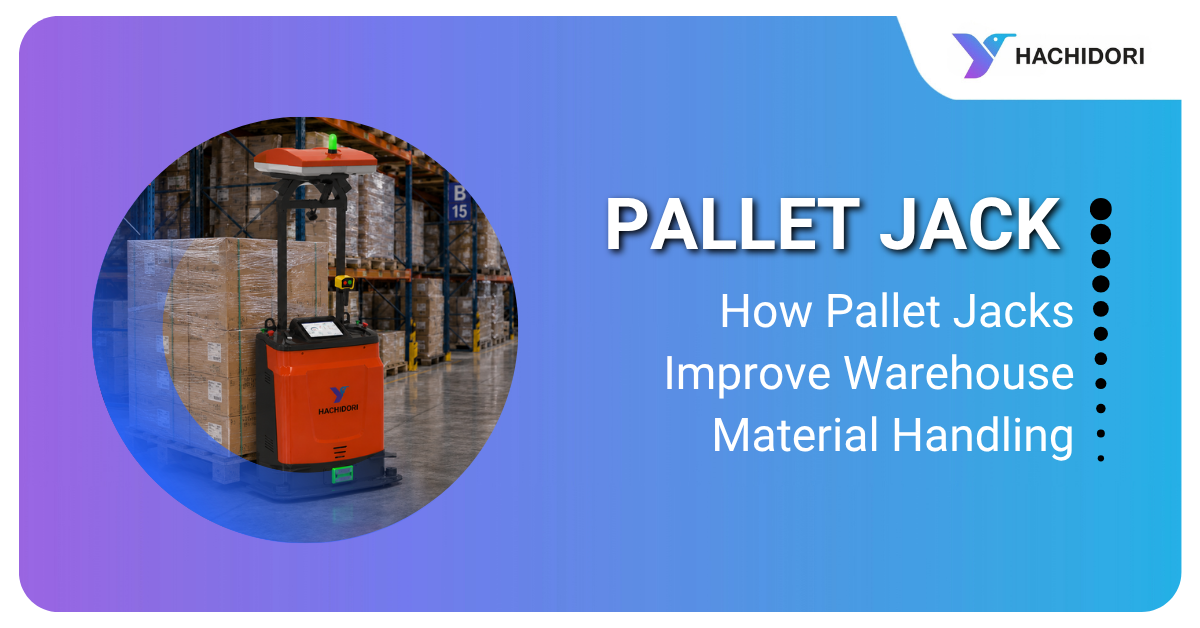
Pallet jack are one of the simplest ways to transform warehouse material handling from slow, labor-intensive, and risky into fast, efficient, and safe operations. Used correctly and paired with modern automation, they can significantly reduce worker fatigue, cut labor costs, and minimise product damage, while keeping material flow smooth across the shop floor and warehouse.
As companies like Hachidori Robotics demonstrate with their intralogistics solutions and Autonomous Mobile Robots (AMRs), efficient pallet movement is the backbone of high-performance factories and warehouses. Pallet jacks sit at the very first layer of this journey helping you move more with less effort and setting the foundation for scalable automation.
What Is a Pallet Jack and Why Does It Matter in Warehouse Material Handling?
A pallet jack (also called a pallet truck or pallet trolley) is a manual or powered pallet handling equipment designed to lift and move palletised loads over short distances inside warehouses and factories. It typically consists of forks that slip under the pallet, a hydraulic pump for lifting, and wheels for easy movement.
In a busy warehouse or manufacturing plant, pallet jacks are often the first touchpoint between inbound goods and your storage or production lines. They influence:
- How fast inbound material moves from dock to storage
- How efficiently pallets are staged for picking and dispatch
- How safely operators can move heavy loads without injury
- How smoothly material flows to assembly lines or packaging areas
For operations managers in manufacturing, warehousing, FMCG, pharmaceutical, and electronics, optimising pallet jack usage is a practical step to improve overall warehouse material handling, before or alongside deploying advanced solutions like AMRs and fully automated intralogistics.
The Real Problem: Slow, Risky, and Labor-Heavy Material Movement
Many warehouses still depend largely on manual methods or under-optimised equipment for pallet movement.
Common pain points include:
Slow material movement: When pallets are moved manually or with insufficient equipment, loading, unloading, and internal transfers take longer. This leads to:
- Longer truck turnaround times
- Delays in feeding production lines
- Bottlenecks in staging, picking, and dispatch
Labor dependency and worker fatigue: Heavy reliance on manual pushing or pulling of loads puts pressure on the workforce. Over time, this causes:
- Physical strain and fatigue for operators
- Higher risk of musculoskeletal injuries
- Reduced productivity over long shifts
Warehouse congestion: Unstructured pallet movement especially when different teams use mixed methods (manual handling, pallet jacks, trolleys)—creates traffic and congestion in aisles:
- Increased chances of collisions
- Unclear material flow paths
- Difficulty in scaling operations or adding more SKUs
Safety risks and product damage: When the wrong equipment is used for the job or pallets are handled in haste:
- Loads can become unstable or topple
- Operators can be injured due to slips or collisions
- Products can be damaged, increasing hidden costs
High labor costs: Inefficient handling forces companies to rely on more people to move the same amount of goods. Over time, this impacts:
- Cost per pallet moved
- Overall cost per order fulfilled
- Ability to remain competitive in high-volume industries
These problems become more pronounced for companies in sectors like automotive, FMCG, electronics manufacturing, and pharmaceuticals, where Hachidori Robotics already supports material movement with advanced AMRs and intralogistics solutions.
How Pallet Jack Improve Warehouse Material Handling
Well-selected and properly deployed pallet jack offer a simple yet powerful way to address these pain points.
- Faster Pallet Transportation Across the Warehouse
Pallet jacks significantly speed up warehouse material handling by simplifying how loads move between key zones:
- Receiving docks to storage racks: Pallet jacks enable quick transfer of pallets directly from the dock to staging or racking areas.
- Production lines and workstations: Materials can be fed to assembly, packaging, or testing stations on time, reducing line stoppages.
- Dispatch and loading bays: Finished goods can be consolidated faster for outbound shipments.
When combined with clear material flow paths and defined staging areas, pallet jacks reduce warehouse congestion and help maintain a steady rhythm of operations.
- Reduced Worker Fatigue and Manual Effort
Instead of pushing or carrying heavy loads, operators use pallet trucks to lift and move pallets with minimal physical effort:
- Hydraulic lifting reduces strain on the back and shoulders
- Smooth wheels allow easy movement even with heavy loads
- Workers can cover larger distances without fatigue
This directly supports better ergonomics and reduces injury risk, particularly in high-volume warehouses operating multiple shifts. Reduced fatigue also improves attention and safety, further lowering accident rates.
- Improved Worker Safety and Lower Risk of Product Damage
Using the right pallet handling equipment for the right loads improves both personnel safety and product integrity:
- Stable lifting and controlled lowering protect fragile goods
- Better manoeuvrability in tight aisles reduces accidental collisions
- Clearly defined travel paths for pallet jacks enhance traffic discipline
In industries like pharmaceutical and electronics manufacturing, where Hachidori Robotics supports precise and safe intralogistics, minimising shocks and vibrations to pallets is critical. Pallet jacks help maintain load stability before materials are handed off to automated systems such as AMRs and conveyors.
- Lower Labor Costs Through Efficiency
By increasing the amount of material one operator can move in the same time, pallet jacks directly improve pallet transportation productivity:
- Fewer manual handlers are needed per shift
- More pallets are moved per hour by each operator
- Lower cost per pallet moved, without compromising safety
As companies scale, this efficiency becomes a competitive differentiator. When paired with automation such as Hachidori’s Autonomous pallet jacks form the “first mile” of intralogistics, after which AMRs take over repetitive, long-distance, or complex routes inside the warehouse.
Educating on the Role of Pallet Jacks in Modern Warehouses
Warehouse and logistics managers often ask: “Where do we start improving material movement?”
Pallet jacks are a natural starting point because they:
- Require low upfront investment compared to heavy machinery
- Fit easily into existing workflows
- Are simple to train operators on
- Deliver fast, visible improvements in movement speed and ergonomics
By standardising the use of pallet trucks in receiving, staging, and line-feeding, managers gain clearer visibility into material flow. This sets the stage for more advanced automation decisions such as deploying robot pallet to support or replace manual pallet movements for certain routes or processes.
Operational Use Cases – From Pallet Jacks to Automation
Once basic handling improves, decision-makers look for ways to integrate pallet jacks into broader warehouse material handling strategies.
Below are practical use cases where pallet jacks work best, and where Hachidori-style intralogistics solutions can elevate performance further.
Short-distance movement and micro-zones.
Use pallet jacks in:
- Dock-to-staging movements
- Within micro-zones near racks or production cells
- For small-batch, high-mix material movements
Here, pallet jacks keep operations agile, while AMRs handle longer, repetitive routes between zones, docks, and storage.
Hybrid handling: Pallet Jacks + AMRs
In more advanced facilities, human-operated pallet jacks often feed automated systems:
- Operators use pallet trucks to move pallets to AMR pickup points
- AMRs transport them autonomously through the warehouse, using patented indoor navigation and positioning technologies (like those used by Hachidori Robotics)
- At delivery points, pallet jacks again assist with local movement and fine positioning
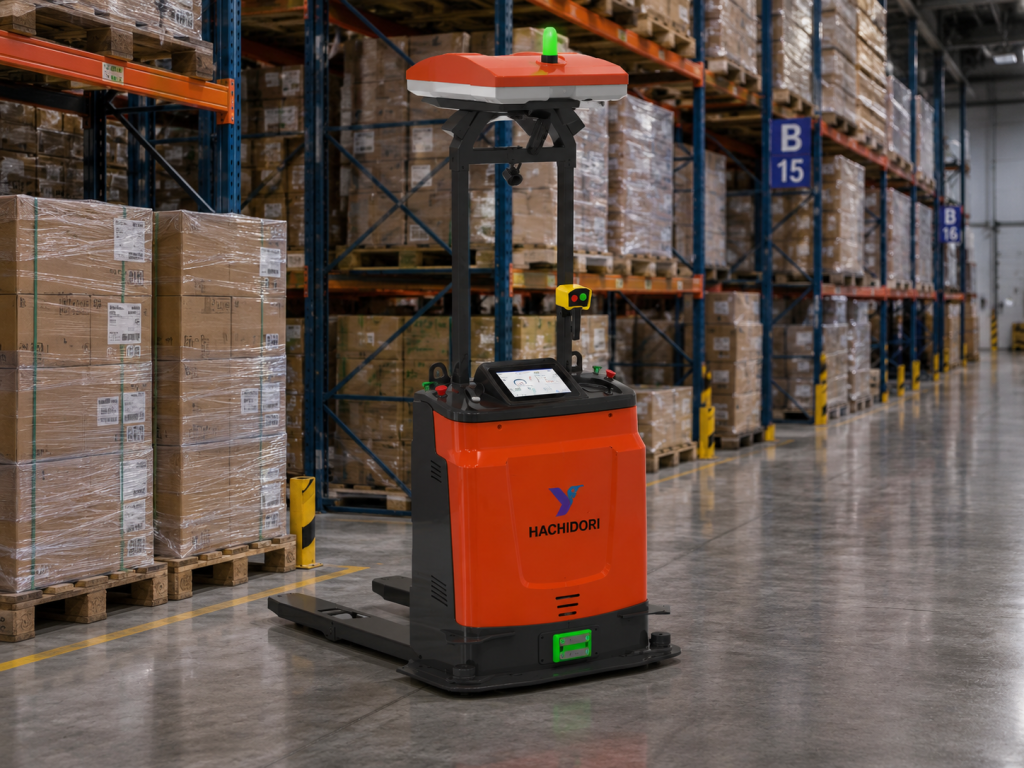
This hybrid model combines the flexibility of manual pallet jacks with the reliability and scalability of AMRs, resulting in:
- Faster, more predictable material flow
- Lower dependency on large teams of operators
- Higher overall capacity without expanding the workforce
Industry examples:
- Automotive: Pallet jacks move components from the dock to kitting areas, while AMRs serve assembly lines.
- FMCG & Warehousing: Pallet trucks handle staging for fast-moving SKUs; AMRs run regular replenishment routes.
- Electronics manufacturing: Sensitive loads are carefully moved with pallet jacks, then handed over to precision AMRs for longer routes to testing or packaging.
- Pharmaceutical: Pallet jacks support cleanroom-compatible carts, while AMRs ensure secure, traceable movement across zones.
From Optimised Pallet Jack Usage to End-to-End Material Handling Solutions
Decision-makers seeking integrated solutions combine simple tools like pallet jacks with cutting-edge automation and software.
Companies like Hachidori Robotics specialise in Autonomous Mobile Robots and intralogistics solutions that build on the foundation laid by good pallet handling equipment practices:
- Indoor positioning and navigation patents ensure precise AMR movement around racks and palletsFha
- Solutions are tailored to manufacturing, warehousing, FMCG, pharmaceutical, and electronics sectors
- AMRs complement pallet jacks by handling longer, repeatable routes and heavy or high-frequency movements
- Material handling becomes predictable, measurable, and scalable
By combining optimised pallet jack usage with automation, businesses can:
- Reduce reliance on manual labour for bulk pallet movement
- Cut travel time for materials across the facility
- Enhance worker safety by delegating hazardous or repetitive routes to AMRs
- Improve throughput without expanding floor area or headcount
For organisations looking beyond incremental improvements, this is the natural next step in warehouse material handling evolution.
Practical Tips to Get More Out of Your Pallet Jacks
To maximise the impact of pallet jacks in your warehouse or factory:
Standardise equipment: Use well-maintained pallet jacks suited to your load profiles. Avoid ad-hoc mixtures of trolleys, carts, and unfit equipment that complicate flow.
Define routes and zones: Map clear routes for pallet jack movement:
- Receiving → Staging → Storage
- Storage → Picking → Dispatch
- Storage → Production lines
This reduces warehouse congestion and improves traffic discipline.
Train operators on safety and ergonomics: Invest in short, focused training covering:
- Safe lifting and lowering
- Speed control in tight aisles
- Correct body posture and handling technique
This reduces accidents and product damag