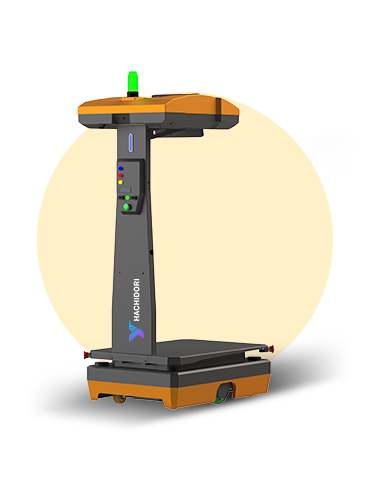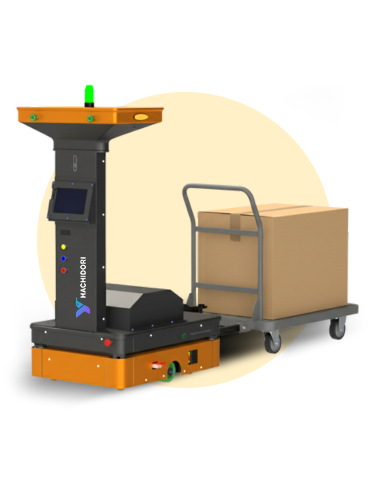
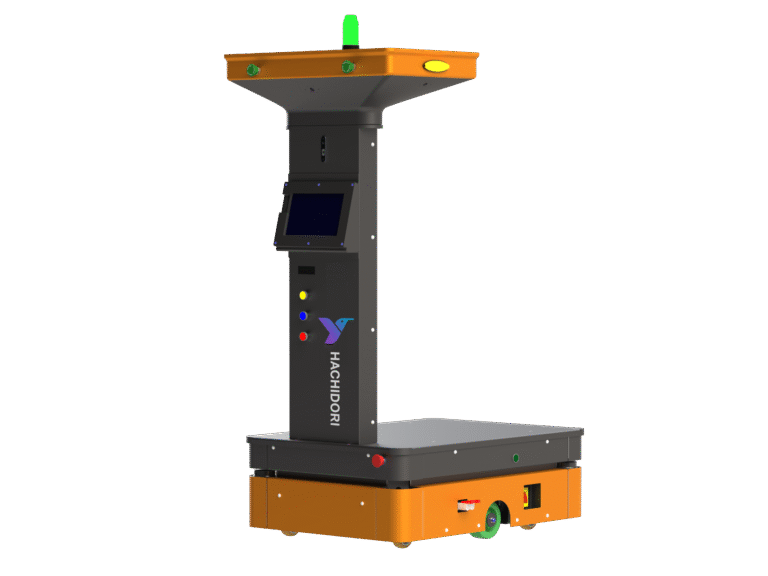
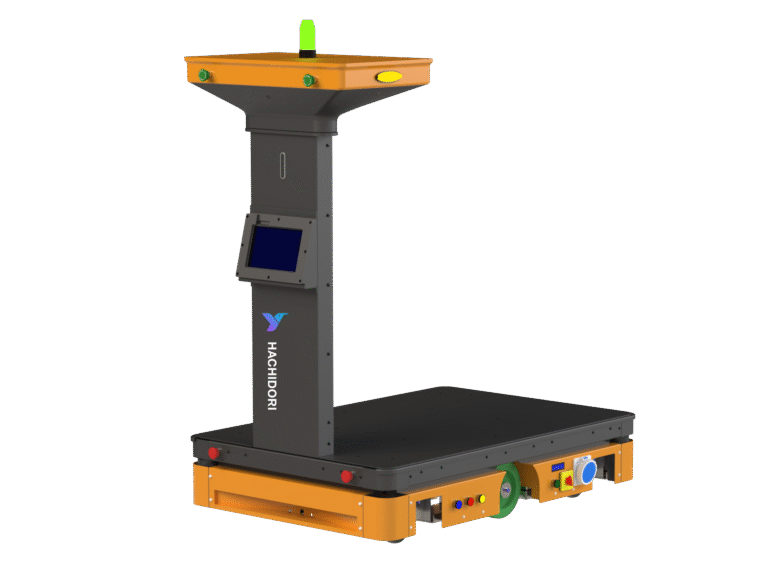


A Unit Load Carrier AMR is an autonomous mobile robot designed to transport unit loads such as pallets, bins, and totes within warehouses and factories. It plays a critical role in material handling automation by improving operational efficiency, reducing manual labor, and enabling scalable industrial automation solutions.
In modern industrial automation environments, efficient material movement is critical. Hachidori’s Unit Load Carrier AMR is engineered to streamline intralogistics operations by autonomously transporting goods across production floors and warehouses. These robots eliminate dependency on manual handling and traditional conveyor systems.
Our AMRs are equipped with Wireless Natural Navigation, real-time obstacle detection, and seamless integration capabilities with WMS and ERP systems, making them a key component of next-generation industrial automation solutions.

Patented Wireless Natural Navigation — no magnetic strips or fixed infrastructure required.

Handles 500 to 2000 kg loads across multiple variants for diverse industrial needs.

2D LiDAR, depth camera, crash bumper, tower lamp & emergency stop for safe coexistence with humans.

Dynamic routing adapts in real-time to changing warehouse layouts and obstacles

Live dashboards for tracking robot status, task progress, and performance analytics.

Native WMS and ERP integration via VDA 5050 standard for plug-and-play deployment.

Instructions from WMS or ERP system

Wireless Natural Navigation

Identifies and secures unit load

Safely moves materials across facility

Real-time data sync with WMS/ERP
Unit Load Carrier AMRs are widely used across industries to enhance material handling automation and streamline operations.
Join leading manufacturers who have transformed their intralogistics with Hachidori ULC AMRs.
| Category | HU200 | HU500 | HU1300 |
|---|---|---|---|
| Navigation | Hachidori’s patented Wireless Natural Navigation (WNN) technology with Sensor Fusion | ||
| Max. Payload | |||
| Load (kg) | 200 | 500 | 1300 |
| Speed & Performance | |||
| Max. Speed | 2 m/s | 1.5 m/s | 1.5 m/s |
| Battery | |||
| Battery Type | LiFePO₄ (Swappable) | ||
| Battery Capacity | 48 V, 12 Ah | 48 V, 27 Ah | 48 V, 27 Ah |
| Safety Sensors | 2D LiDAR + 3D Depth Camera with sensor fusion; Cat0 emergency stop and Cat1 controlled stop | ||
| Indicators | Flashers, Buzzers, Sirens | ||
| Controls | Ergonomically placed Touchscreen Display, Start/Stop & Emergency buttons | ||
| Workflow Triggers | Touchscreen (Manual); Calling Device (Remote); Centralized WMS API calls | ||
| Feature | Hachidori ULC AMR | Manual Handling | Forklifts | Traditional AGVs |
|---|---|---|---|---|
| Navigation | Wireless Natural Navigation | Human dependent | manual driving | Fixed path (magnetic/line) |
| Flexibility | High (dynamic routing) | Low | Medium | Low |
| Safety | Advanced sensors & obstacle detection | Low | Medium (risk of accidents) | Medium |
| Efficiency | High (24/7 operation) | Low | Medium | Medium |
| Labor Dependency | Minimal | High | High | Medium |
| Scalability | Easily scalable fleet | Not scalable | Limited | Complex & costly |
| Integration | WMS / ERP integration | No | Limited | Limited |
| Setup Time | Fast deployment | None | Moderate | High (infrastructure needed) |
| Maintenance | Low (predictive) | N/A | High | Medium |
| ROI | High (12–18 months) | No ROI | Low ROI | Medium ROI |
| Operational Cost | Low | High (labor cost) | High (fuel + labor) | Medium |
Hachidori AMRs deliver up to 30–50% improvement in material handling efficiency compared to traditional methods.

Fast, flexible material movement in dynamic environments
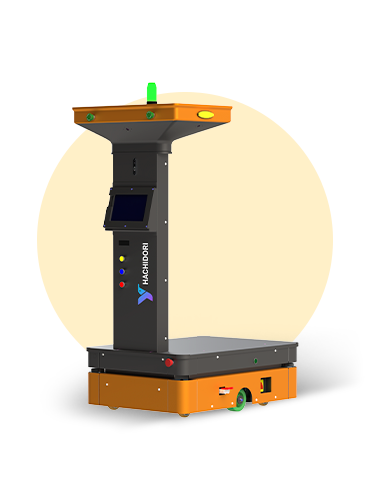
Load-on-top AMR, 200–2000 kg

Tugging solution for bulky, lightweight materials
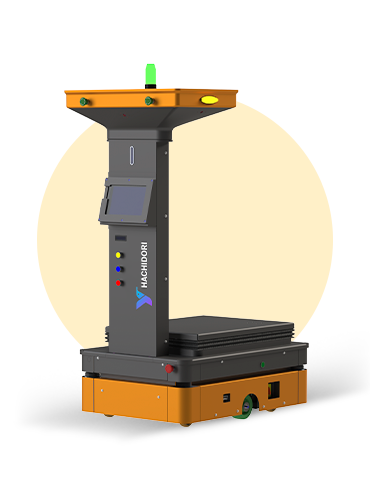
Lifts existing trolleys & platforms autonomously
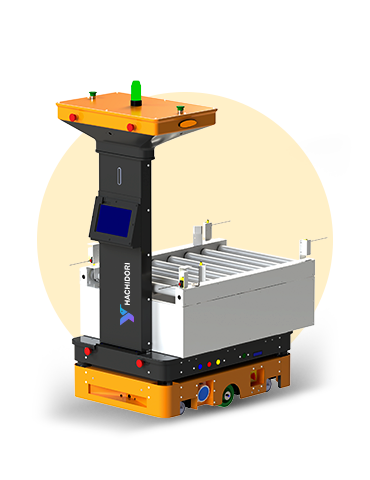
Docking with workbenches for conveying materials
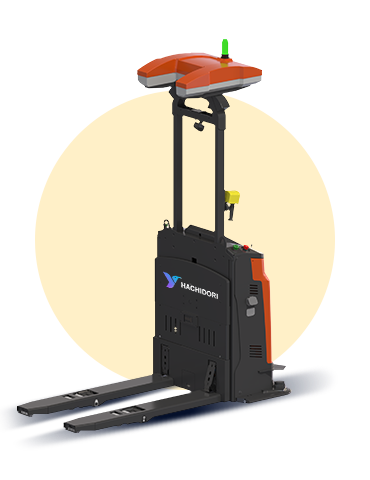
Lift & move standard palletized materials
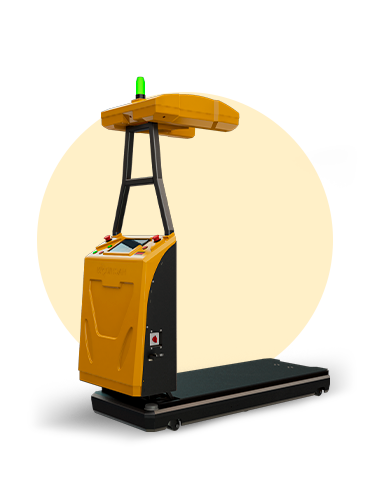
Goes under factory trolleys for seamless lifting
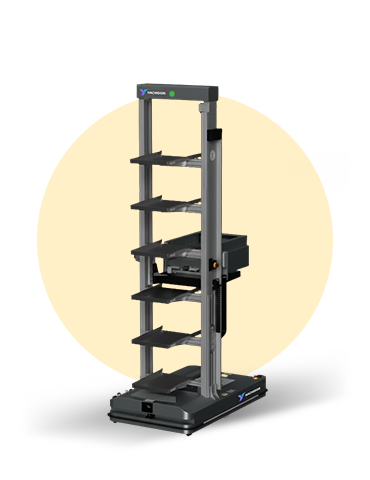
Carton transfer for multi-tote simultaneous movement
ULC AMRs can handle a wide range of loads including bins, totes, cartons, trays, and small pallets, depending on payload capacity and configuration.
ULC AMRs improve efficiency, reduce manual labor, minimize errors, increase throughput, and ensure safe and consistent material movement.
Yes, they are designed with safety features like obstacle detection and collision avoidance, allowing them to safely operate alongside human workers.
Industries such as e-commerce, manufacturing, automotive, FMCG, pharmaceuticals, and logistics benefit from ULC AMRs.
Yes, ULC AMRs can be easily integrated with existing warehouse management systems (WMS), ERP systems, and workflows.
Minimal to no infrastructure changes are required, as they use natural navigation and do not depend on fixed tracks or markers.
They are powered by rechargeable batteries and often support automatic charging or opportunity charging for continuous operations.
Yes, they are designed to operate efficiently in narrow lanes and congested environments with high precision.
This will close in 0 seconds
WhatsApp us