
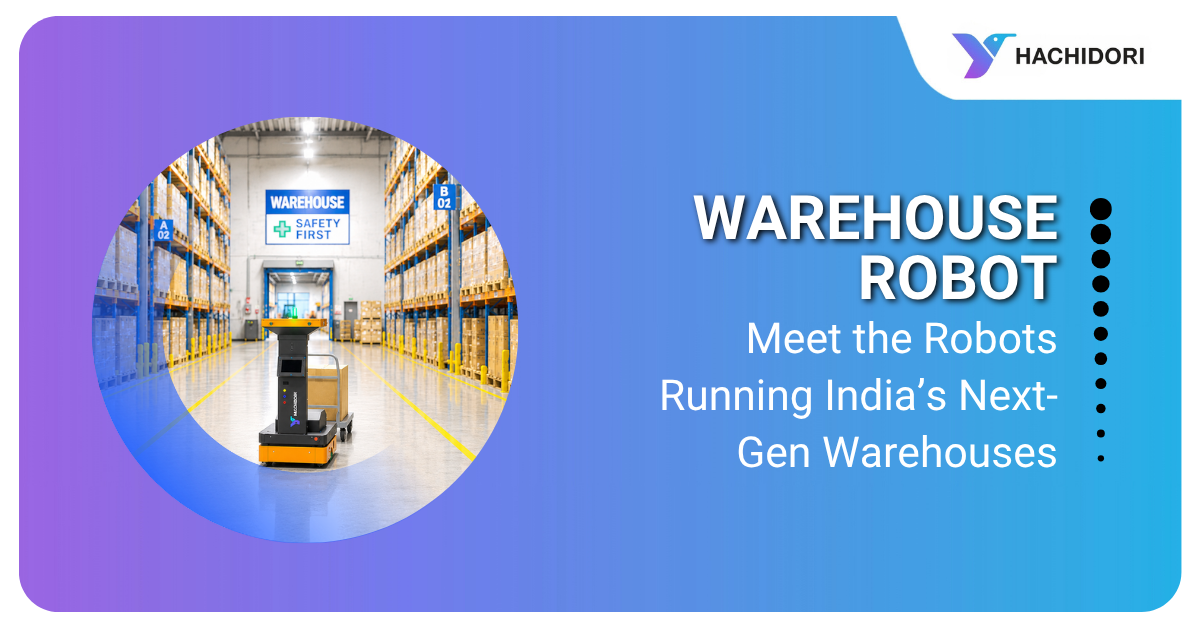
Meet the Robots Running India’s Next-Gen Warehouses
India’s logistics and manufacturing sectors are rapidly evolving with the rise of smart factories, e-commerce growth, and Industry 4.0 technologies. Businesses are now shifting from traditional material handling methods to intelligent automation systems that improve speed, accuracy, and operational efficiency. At the center of this transformation is the Warehouse automation robot — the driving force behind India’s next-generation warehouses.
From automotive manufacturing plants to electronics factories and e-commerce fulfillment centers, warehouse robots are redefining how warehouses operate. Among the most advanced solutions today are AMR Robots (Autonomous Mobile Robots), which are helping businesses automate internal logistics, reduce labor dependency, and optimize warehouse productivity.
In this blog, we’ll explore how warehouse automation robots are transforming industries, why Indian businesses are rapidly adopting Autonomous Mobile Robots, and how companies can benefit from next-gen warehouse automation.
Why Warehouse Automation Robot Technology Is Growing in India
The Indian warehousing industry is experiencing unprecedented growth due to:
- Expansion of e-commerce and retail
- Increasing labor shortages
- Demand for faster order fulfillment
- Rising operational costs
- Need for error-free inventory management
Traditional warehouse operations often involve manual movement of goods, which leads to delays, inefficiencies, and workplace safety risks. This is where warehouse automation robots play a major role.
Modern warehouse automation systems are designed to streamline material movement, improve inventory accuracy, and reduce operational bottlenecks. With automation, businesses can achieve faster turnaround times while minimizing human intervention in repetitive tasks.
Today, companies are investing heavily in warehouse automation robots to stay competitive in a fast-moving market.
What Are Autonomous Mobile Robots (AMRs)?
Autonomous Mobile Robots (AMRs) are intelligent robotic systems designed to navigate warehouse floors without fixed tracks or manual guidance. Unlike conventional automated systems, AMRs use advanced technologies such as:
- AI-powered navigation
- LiDAR sensors
- Cameras and mapping systems
- Real-time obstacle detection
- Fleet management software
These robots can independently move materials, transport pallets, carry bins, and optimize warehouse workflows.
The biggest advantage of AMR Robots is flexibility. They can dynamically adjust routes based on warehouse traffic and operational requirements, making them ideal for modern smart warehouses.
How Warehouse Robots Are Transforming Next-Gen Warehouses
The rise of warehouse robots is changing the entire logistics ecosystem. Companies are now operating highly automated warehouses where robots handle repetitive and time-consuming tasks.
Key Areas Where Warehouse Robots Are Used
1. Material Transportation
AMRs automatically transport raw materials, finished goods, and inventory between warehouse zones without human assistance.
2. Inventory Handling
Robots help in locating, picking, and moving inventory with greater accuracy and reduced human error.
3. Order Fulfillment
E-commerce warehouses use warehouse automation robots to speed up order picking and packaging processes.
4. Production Line Supply
In manufacturing industries, AMR Robots deliver materials directly to production lines, ensuring uninterrupted operations.
5. Pallet Movement
Heavy pallet transportation becomes safer and faster using automated robotic systems.
Benefits of Warehouse Automation Robots
Businesses adopting warehouse automation are witnessing significant operational improvements. Below are some of the major advantages:
Improved Operational Efficiency
Robots can work continuously without fatigue, helping businesses improve productivity and reduce downtime.
Reduced Labor Dependency
With increasing labor shortages and rising wages, automation reduces dependence on manual labor for repetitive tasks.
Enhanced Workplace Safety
AMRs are equipped with safety sensors that prevent collisions and accidents inside warehouses.
Faster Material Movement
Automated systems optimize internal logistics, reducing delays in material transportation.
Scalable Operations
As warehouse demand grows, additional robots can easily be integrated into the system.
Higher Accuracy
Automation minimizes human errors in inventory handling and order fulfillment.
Warehouse Automation Robot Solutions for Different Industries
The adoption of warehouse automation robots is expanding across multiple industries in India.
Automotive Industry
Electronics Manufacturing
E-Commerce & Retail
Pharmaceutical Industry
Food & Beverage Industry
Why AMR Robots Are Better Than Traditional Automation
Traditional warehouse automation systems often rely on fixed infrastructure such as conveyors and guided tracks. While effective in certain environments, they lack flexibility.
In contrast, AMR Robots offer:
- Flexible navigation
- Easy deployment
- Lower infrastructure changes
- Real-time route optimization
- Better scalability
- Faster ROI
This flexibility makes Autonomous Mobile Robots a preferred choice for businesses planning future-ready warehouse operations.
Key Features to Look for in Warehouse Automation Robots
Before implementing a warehouse automation robot, businesses should evaluate several important factors:
Navigation Technology
Choose robots equipped with advanced AI navigation and obstacle detection systems.
Payload Capacity
Select robots based on the type and weight of materials being transported.
Battery Performance
Long battery life ensures uninterrupted warehouse operations.
Software Integration
Ensure compatibility with existing warehouse management systems (WMS).
Safety Standards
Robots should comply with industrial safety standards for smooth deployment.
The Future of Warehouse Automation in India
India is becoming a major hub for smart manufacturing and industrial automation. As industries continue to modernize, the demand for warehouse automation robots and AMR Robots will increase significantly.
Future warehouses will focus on:
- AI-driven logistics
- Fully connected smart warehouses
- Real-time inventory tracking
- Predictive maintenance
- Human-robot collaboration
Businesses that invest early in warehouse automation will gain a competitive advantage through improved operational efficiency and lower long-term costs.
Why Businesses Should Invest in Warehouse Automation Robot Solutions Today
Companies that delay automation adoption may struggle with rising operational costs, slower fulfillment, and reduced productivity. Implementing warehouse robots today allows businesses to:
- Improve supply chain efficiency
- Reduce operational errors
- Enhance warehouse productivity
- Increase delivery speed
- Achieve long-term cost savings
Modern customers expect faster deliveries and seamless operations. Investing in Autonomous Mobile Robots helps businesses meet these expectations while staying ahead in a highly competitive market.
Transform Your Warehouse with Smart Automation
The future of warehousing belongs to intelligent automation. From material transportation to inventory handling, warehouse automation robots are revolutionizing industrial operations across India.
Businesses adopting AMR Robots are experiencing improved productivity, enhanced safety, and optimized logistics performance. As industries move toward smart manufacturing, implementing warehouse automation is no longer optional — it is essential for sustainable growth.
If you are planning to modernize your warehouse operations, now is the right time to explore advanced warehouse automation robot solutions designed for next-generation industrial environments.