
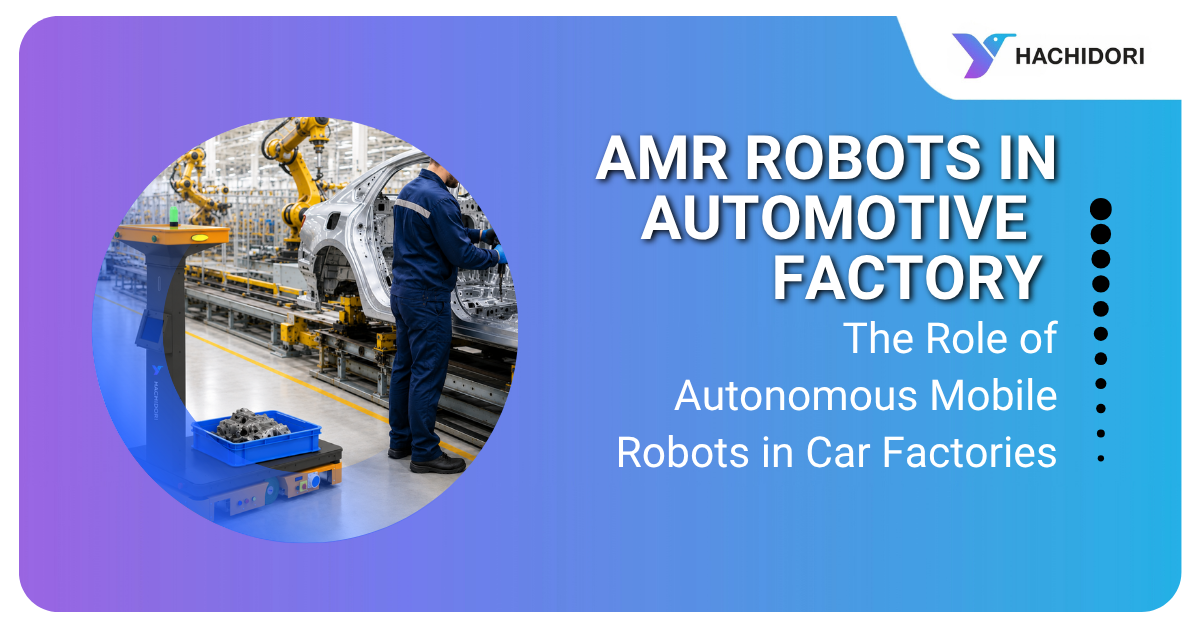
The automobile manufacturing industry is rapidly evolving with the adoption of factory automation robot solutions that improve productivity, reduce operational delays, and increase workplace safety. Among the latest innovations transforming the sector, Autonomous Mobile Robots (AMRs) are becoming a key driver of modern Automobile Automation and smart manufacturing.
Today’s car factories require faster material movement, accurate inventory handling, and uninterrupted production workflows. Traditional manual transportation methods are no longer sufficient for high-volume automotive production. This is where autonomous mobile robots play a critical role by enabling intelligent and flexible Intralogistics automation inside manufacturing plants.
From transporting heavy automotive components to supporting assembly line operations, factory automation robots are helping automobile manufacturers achieve greater efficiency and operational excellence.
Factory Automation Robot Solutions are Transforming Car Manufacturing
The automotive industry operates with complex production systems where every second matters. Delays in material transportation or inventory management can affect the entire assembly line. Modern factory automation robot systems powered by AMRs solve these challenges through intelligent navigation, real-time monitoring, and automated material handling.
Unlike traditional Automated Guided Vehicles (AGVs), AMR Robots use advanced sensors, AI-driven navigation, and mapping technologies to move independently without fixed tracks or magnetic tapes. This flexibility makes them ideal for dynamic automotive factory environments.
Key Applications of Autonomous Mobile Robots in Car Factories
- Material transportation between production zones
- Engine and gearbox movement
- Assembly line component delivery
- Warehouse-to-production material transfer
- Finished goods transportation
- Inventory movement and pallet handling
- Just-in-time material supply operations
These applications help manufacturers streamline Automobile industry automation while reducing manual dependency.
Why Car Factories are Investing in Factory Automation Robot Technology
Modern automotive companies are under pressure to increase production speed while maintaining quality and worker safety. Implementing factory automation robot systems allows manufacturers to optimize internal logistics and improve operational consistency.
1. Improved Production Efficiency
One of the biggest advantages of autonomous mobile robots is their ability to automate repetitive transportation tasks. AMRs operate continuously with minimal downtime, ensuring smooth movement of materials across the factory floor.
This improves assembly line productivity and reduces delays caused by manual handling.
2. Enhanced Workplace Safety
Car manufacturing plants involve heavy machinery, large components, and high worker movement. AMRs reduce the need for manual transportation of heavy automotive parts, minimizing workplace accidents and injuries.
Advanced obstacle detection systems also allow AMR Robots to safely navigate around employees and machinery.
3. Flexible Manufacturing Operations
Unlike fixed automation systems, factory automation robots can adapt to changing factory layouts. Automotive manufacturers frequently modify production lines based on vehicle models and market demand.
AMRs can quickly adjust routes and workflows without expensive infrastructure modifications.
4. Reduced Operational Costs
By automating internal logistics, manufacturers can reduce labor-intensive transportation activities. This lowers operational costs while increasing productivity and efficiency.
In the long term, Intralogistics automation helps automotive companies improve ROI and reduce material handling inefficiencies.
The Growing Importance of Intralogistics Automation in Automobile Manufacturing
Efficient material flow is critical in automotive production. Delays in supplying components to assembly lines can slow down the entire manufacturing process. This is why Intralogistics automation has become a major focus area in modern automobile factories.
Using autonomous mobile robots, manufacturers can automate:
- Raw material movement
- Production line replenishment
- Warehouse inventory transportation
- Finished vehicle part handling
- Internal pallet transfer operations
With real-time data tracking and intelligent routing, AMRs ensure that materials reach the right destination at the right time.
This level of automation significantly improves operational visibility and production planning.
How AMR Robots Support Smart Factory Development
The future of automotive manufacturing lies in smart factories powered by AI, robotics, and connected technologies. AMR Robots are a crucial component of this transformation.
These robots integrate seamlessly with:
- Warehouse Management Systems (WMS)
- Manufacturing Execution Systems (MES)
- ERP platforms
- IoT-enabled factory systems
This integration allows manufacturers to monitor material flow, optimize logistics, and make real-time operational decisions.
As a result, Automobile Automation becomes more intelligent, scalable, and data-driven.
Benefits of Factory Automation Robots in Car Factories
Major Advantages Include:
- Faster material movement
- Reduced manual errors
- Lower labor dependency
- Improved inventory accuracy
- Enhanced operational safety
- Higher production efficiency
- Scalable factory automation
- Better space utilization
- 24/7 operational capability
These benefits make factory automation robot solutions an essential investment for automotive manufacturers aiming to remain competitive.
Future of Autonomous Mobile Robots in the Automobile Industry
The adoption of autonomous mobile robots is expected to grow rapidly as automotive manufacturers continue investing in Industry 4.0 technologies.
Future AMR systems will include:
- AI-powered predictive navigation
- Advanced fleet management systems
- Real-time analytics and monitoring
- Collaborative robot integration
- Automated charging capabilities
As electric vehicle production increases, automotive factories will require smarter and more flexible logistics automation systems. This will further accelerate the demand for factory automation robots and intelligent Intralogistics automation solutions.
Why Automotive Manufacturers Should Invest in AMR Robots
Manufacturers that adopt AMR Robots gain a significant competitive advantage through improved efficiency, lower operational costs, and optimized production workflows.
In today’s highly competitive automotive market, automation is no longer optional. Companies investing in Automobile industry automation can achieve:
- Faster production cycles
- Better operational control
- Reduced downtime
- Higher productivity
- Improved worker safety
- Enhanced supply chain efficiency
The combination of AI, robotics, and smart logistics is shaping the future of automotive manufacturing.
Conclusion
The role of factory automation robot systems in modern car factories is becoming increasingly important. With the growing demand for efficiency, flexibility, and safety, autonomous mobile robots are transforming the way automotive manufacturers manage internal logistics and production operations.
From intelligent material transportation to advanced Intralogistics automation, AMRs help automobile companies optimize workflows, reduce costs, and improve productivity.
As the automotive sector moves toward smart manufacturing and Industry 4.0, investing in factory automation robots and AMR Robots will be essential for businesses looking to stay ahead in the evolving industrial landscape.
Boost productivity, streamline material movement, and accelerate your automation journey with innovative robotics solutions from Hachidori Robotics.